HVAC Mold Cleaning in Escondido, CA
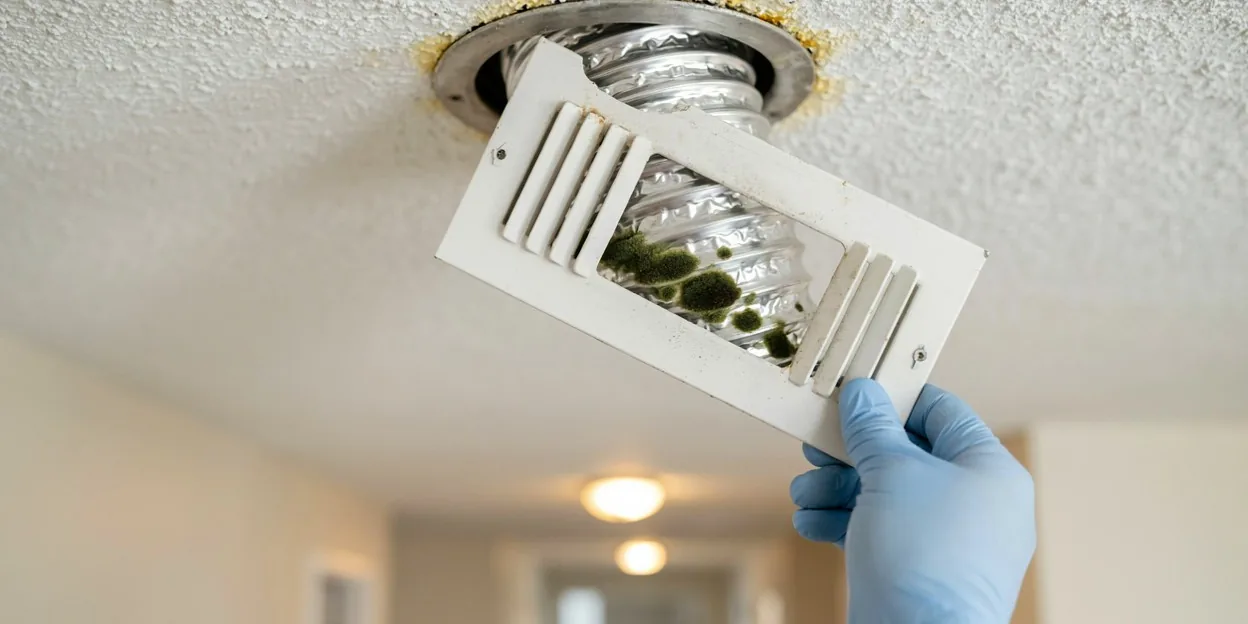
Every afternoon in August, when the thermostat calls for cooling, the hallway smells sour for about a minute and then the smell fades into the usual cold air. There is a faint brown ring on the hall ceiling, right below the attic access, and it was not there in June. This site connects you by phone with an independent local provider who does HVAC mold cleaning in Escondido and across inland North San Diego County.
Up the attic ladder on a 100-degree afternoon
The crew opens the cabinet. Inside are the coil, wet all summer, the drain pan under it, the insulation lining the cabinet, and the condensate line that is supposed to carry the water to a drain or outside. In an Escondido attic the line fills with algae and dust during the hottest weeks, the pan overflows onto the platform, and the cabinet sits in water while the blower runs most of the day.
Then they look at the ducts. In an attic that passes 130 degrees, a duct leaking cold air sweats on the outside and drips onto the insulation below it. A flashlight and a camera at each register tell them whether the growth lives on the cabinet, on the coil, or inside the flex duct.
Find the drain outlet and set the fan to auto
Do not spray anything into the return grille or the cabinet, and leave the hardware-store fogger on the shelf; either one pushes chemicals through the ducts into every bedroom. Set the thermostat fan to auto so the blower runs only while cooling, and if the ceiling ring is spreading, shut the system off until the crew arrives.
Go outside and find the condensate outlet, a small PVC pipe near the outdoor unit or poking through an eave. If nothing drips from it on a hot afternoon while the system runs, the line is clogged. Note the age of the system from the sticker inside the cabinet door and whether a float switch is installed on the pan.
Metal is cleaned, duct liner and wet insulation are replaced
The metal stays. The crew cleans the coil in place, flushes or swaps the pan, blows out the condensate line, and most add a float switch so the next clog shuts the system down instead of flooding the platform. The cabinet is HEPA-vacuumed and wiped inside and out.
The porous parts do not come clean. Fiberglass duct board, the cabinet's old liner, flex duct with growth inside, and attic insulation under a sweating run are pulled and replaced. The stained hall ceiling under the platform is a separate job; see mold removal for a single wet ceiling or black mold removal if the patch has gone dark. When the sheathing above a sweating duct has gone gray, that part is attic mold remediation. A smell that stays after the cabinet is clean is mold odor removal.
Attic platforms, closet units, and the long inland cooling season
Escondido houses from the 1980s on, in Hidden Meadows, Rancho San Pasqual, Eureka Ranch, and the East Valley tracts, almost all put the air handler on a plywood platform in the attic with flex duct running through heat that far exceeds the air outside. Older ranches in Felicita and Mountain View put the unit in a hall closet, where an overflowing pan shows up on the closet wall and the carpet in front of it. Either way the system runs from May into October, and the condensate it makes in those months is more water than most of these houses see from any other source.
California does not license mold work, and the HVAC side is its own contractor classification under the Contractors State License Board. The provider who cleans the cabinet and replaces duct is working under that license, and you can ask for the number on the call. Mold in a duct system is not something the state health department tests for; its guidance is that a wet system is cleaned or replaced, not sampled.
Calling about a sour smell from the vents in Escondido
Have the address, where the air handler sits, how long the smell has been there, and whether you see a ring on the ceiling or water on the platform. Say whether the drain outlet drips when the system runs. Call (760) 546-5839.